
Why Your AC Runs But Isn't Cooling: Common Causes and What to Check
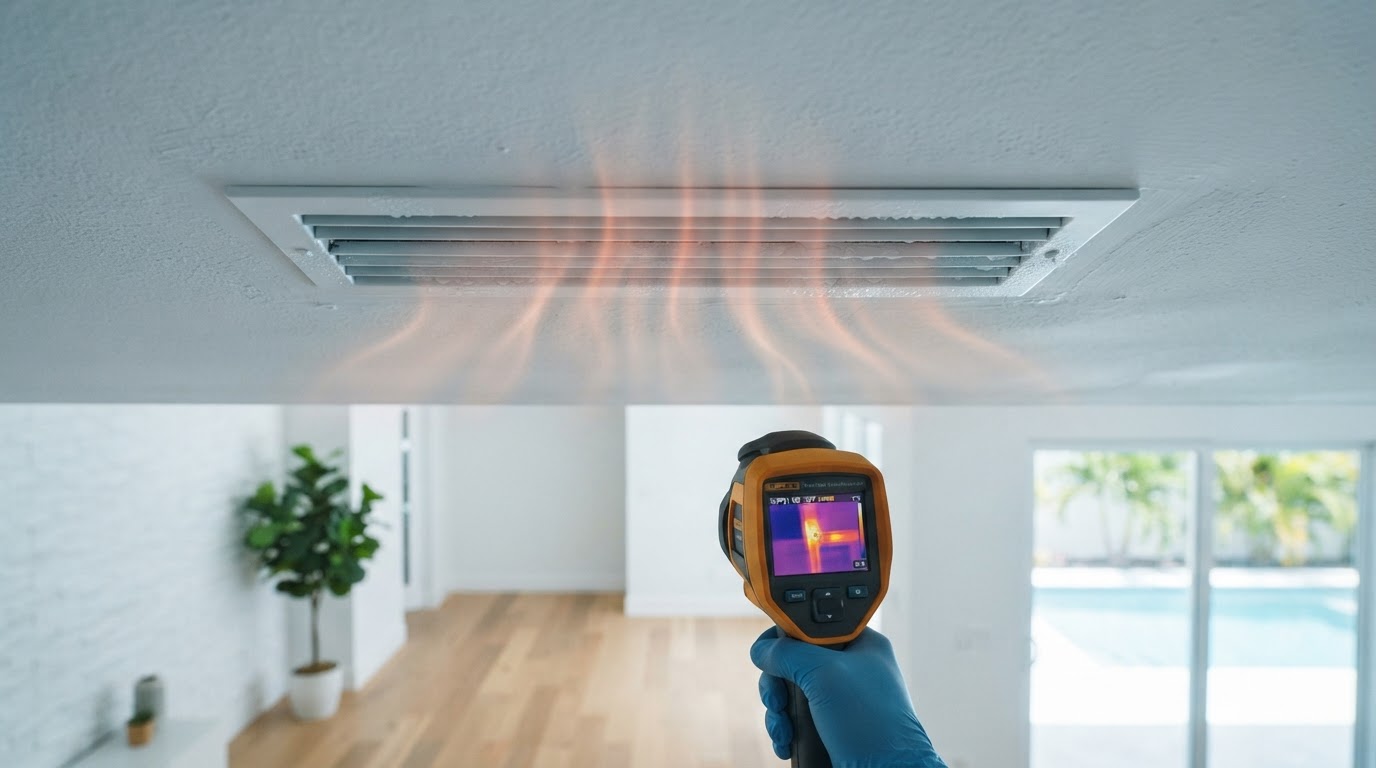
An air conditioner that runs but doesn't cool may have an airflow restriction, a thermostat issue, a frozen evaporator coil, a refrigerant problem, an electrical-control fault, or a drainage-related shutdown. Homeowners can safely confirm the thermostat setting and inspect an accessible filter, but electrical and refrigerant diagnosis should be handled professionally. Martin's Family Cooling provides AC repair and diagnostics for homes and businesses across Broward and Miami-Dade counties, and this guide explains the common causes of a running-but-not-cooling system and what to check before calling for service.
How an AC is supposed to cool
To understand why a system stops cooling, it helps to know what's supposed to happen. Your air conditioner absorbs heat from indoor air at the evaporator coil, transfers that heat to the outdoor condenser via refrigerant, and releases it outside. The indoor air handler blows air across the cold evaporator coil and through your ducts, lowering the temperature and removing humidity.
Cooling depends on three things working together: adequate airflow across the coils, the correct refrigerant charge and pressure, and properly functioning electrical controls. When any one of these breaks down, the system may keep running — the fan spins, the thermostat shows it's on — but the air coming from the vents is warm. That's the signature of a running-but-not-cooling problem.
Common causes, from most to least frequent
In South Florida's humid climate, the causes of a running-but-not-cooling system tend to follow a predictable pattern. Here are the most common, roughly in order of how often they appear.
- Dirty or clogged air filter — restricts airflow over the evaporator coil, reducing cooling and often causing the coil to freeze.
- Frozen evaporator coil — ice insulates the coil, so it can't absorb heat; usually caused by poor airflow or low refrigerant.
- Low refrigerant from a leak — lowers coil pressure and temperature, reducing cooling capacity.
- Dirty evaporator or condenser coil — dust acts as insulation, reducing heat transfer.
- Faulty capacitor or contactor — the outdoor fan or compressor may not start even though the indoor unit runs.
- Thermostat issue — the system may not be calling for cooling correctly, or the setting may be wrong.
- Duct problem — a disconnected or leaking duct can deliver warm air even when the equipment is working.
- Drainage-related shutdown — a clogged condensate drain can trigger a safety switch that stops cooling.
What you can safely check
Before calling for service, a few checks are safe for most homeowners and sometimes resolve the issue. First, verify the thermostat is set to cool and the setpoint is below the room temperature — a thermostat accidentally in "heat" or "off" is a common and easily fixed cause.
Second, inspect and replace an accessible air filter if it's clogged. A dirty filter is the single most frequent cause of weak cooling and frozen coils in South Florida homes, and replacing it is a manufacturer-recommended step. Third, check whether a breaker has tripped once; if it has, reset it, but repeated trips signal an electrical problem that needs a professional.
Finally, make sure supply vents are open and unblocked and the outdoor condenser is clear of debris. These checks are the limit of safe homeowner action. Anything involving electrical panels, refrigerant lines, capacitors, or pressurized components should be left to a trained HVAC professional — these carry risk of injury and require specialized equipment.
The frozen coil problem
A frozen evaporator coil deserves special attention because it's so common in South Florida. When airflow across the coil drops — usually from a dirty filter or a dirty coil — the coil temperature falls below freezing, and the condensing humidity turns to ice. The ice insulates the coil, so it can't absorb heat, and the air from your vents turns warm even though the system is running.
If you see frost on the refrigerant lines or feel weak, warm airflow, turn the AC off and switch the fan to ON. This pushes warmer air across the coil to melt the ice, which can take a few hours. Don't try to chip the ice off — you can damage the coil. Check and replace the filter. If the freeze returns after the filter is clean, you likely have a refrigerant leak or a failing component that needs professional diagnosis. Our guide to why AC coils freeze in South Florida covers this in more depth.
When to call a professional
Some symptoms clearly call for professional evaluation. If you smell burning, see smoke or sparking, or experience repeated breaker trips, stop using the system and call for service — these can indicate electrical faults that are unsafe to handle without training. A suspected refrigerant leak also requires a professional, since refrigerant handling requires EPA certification and the leak should be located and repaired, not just recharged.
Persistent symptoms are another signal. If warm air returns after a filter change, if the coil freezes repeatedly, or if the system short-cycles despite clean filters, the cause is likely a component or refrigerant issue that needs diagnosis. The same is true for a system that won't start the outdoor unit even though the indoor fan runs — a common sign of a failed capacitor or contactor. In these cases, a professional AC repair visit is the right next step.
Why diagnosis comes before repair
Because the same symptom — warm air — can come from a dirty filter, a refrigerant leak, a failed capacitor, or a duct problem, the right fix depends on identifying the actual cause. A technician diagnoses by checking operating conditions, airflow, refrigerant pressures, electrical components, and controls, then explains what's wrong and quotes the repair.
This matters for your wallet as much as your comfort. Recharging refrigerant without finding the leak only delays the problem, and replacing a part without confirming it's the cause wastes money. Diagnosis first ensures the repair addresses the real issue. If you're weighing whether a repair is worth it on an older system, our AC repair vs. replacement guide can help frame the decision.
Preventing a repeat
Many running-but-not-cooling problems are preventable with routine maintenance. Replacing your filter regularly, keeping supply vents open, and scheduling tune-ups twice a year keeps airflow healthy and catches developing concerns — a weakening capacitor, a slow drain clog, a dirty coil — before they cause a breakdown.
In South Florida's year-round cooling climate, maintenance is one of the best ways to protect your system. A maintenance visit inspects the components most likely to cause a cooling failure and helps the system run efficiently, which can lower operating costs over time.
Frequently asked questions
Why is my AC running but not cooling? Common causes include a dirty filter, a frozen coil, low refrigerant, a dirty coil, a failed capacitor or contactor, a thermostat issue, a duct problem, or a drainage-related shutdown. A diagnostic visit identifies the actual cause.
Can I fix it myself? You can safely check the thermostat setting, replace an accessible filter, reset a tripped breaker once, and clear vents. Electrical, refrigerant, and component work should be handled by a professional.
How do I know if my coil is frozen? Look for frost on the refrigerant lines or weak, warm airflow. If you see ice, turn the AC off, set the fan to ON to melt it, and replace the filter. If it freezes again, call for service.
Will adding refrigerant fix it? Only temporarily, if low refrigerant is the cause — and only a certified professional can add refrigerant. A low charge usually means a leak that should be located and repaired, not just recharged.
How can I prevent this from happening again? Replace your filter regularly, keep vents open, and schedule maintenance twice a year. Routine tune-ups catch the common causes of cooling failure before they become breakdowns.
The Martin Family Team
Martin's Family Cooling — licensed & insured HVACR contractor serving Broward & Miami-Dade.